Industries
HVAC crane services
The right crane for the lift, with NCCCO-certified operators and riggers for HVAC jobs. Based in West Texas, working statewide.
Crane service for HVAC jobs
Rooftop units, chillers and air handlers go up by crane. Tell us the unit weights, the building and the date.
Lifts we take on include:
- Setting rooftop units
- Setting chillers and cooling towers
- Change-outs of old units
- Setting air handlers and ductwork
Rooftop unit and chiller crane lifts
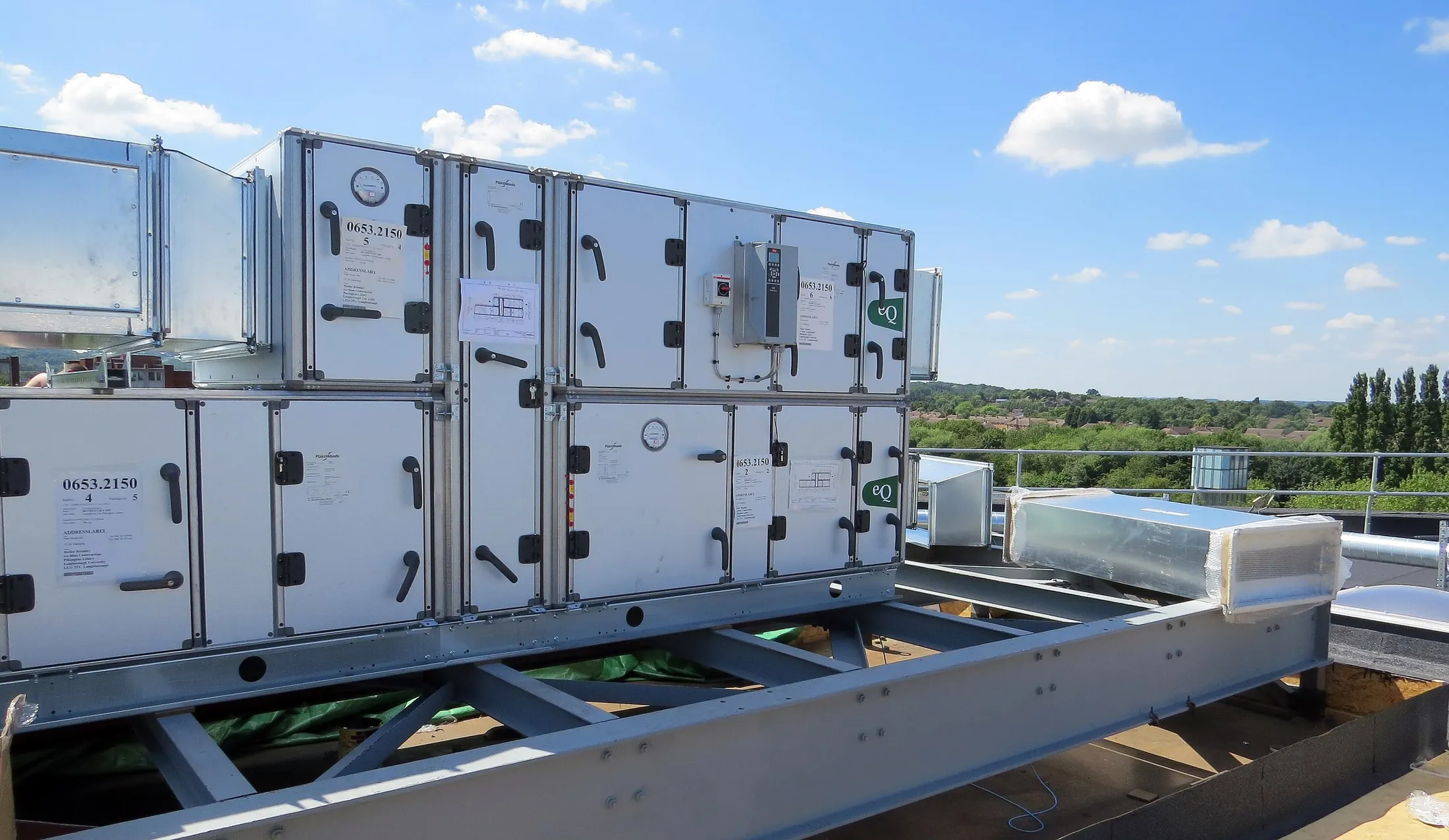
Most HVAC crane jobs are rooftop work: setting new rooftop units on curbs, swapping old units for new, and lifting condensing units, exhaust fans and air handlers up to the roof. On a change-out, the old unit comes off the curb, any curb adapter goes on, and the new unit sets down in the same spot, often several units in one day. Ductwork, curbs and steel can go up on the same trip.
Chillers and cooling towers are heavier and often sit on the ground or on rooftop steel dunnage. Field-erected towers go up in sections. On rooftop jobs the size of the crane is usually set by reach, not weight: a unit in the middle of a big roof can be a long way from the closest spot a crane can set up, whether that is a parking lot, an alley or the street.
- Get unit weights from the submittals and the roof locations.
- Pick the crane spot and line up any street or lot closure.
- Confirm old units are disconnected and curbs or adapters are ready.
- Barricade the swing area so nobody walks under the load.
- Lift old units off and set new units on their curbs.
- Load old units on the truck and reopen the lot or street.
Crane and operator for HVAC jobs
Every job goes out with the right crane for the lift, an NCCCO-certified operator and a rigger.
The weights and the reach decide the crane, so have these ready before you call dispatch about an HVAC lift:
- Unit weights and dimensions from the submittals
- Roof plan showing where each unit sets
- Where the crane can set up near the building
- Street or parking lot permits, if needed
- Overhead power lines near the setup spot
- Date and time window the building allows
Rigging plans and safety plans for HVAC jobs
HVAC lifts usually swing over a working building, a parking lot or a sidewalk, so the safety plan starts with keeping people out from under the load: barricades, closed entrances and a spotter where the public walks. We write rigging plans and safety plans that set the crane spot, the swing path and the rigging for each unit, including the spreader bars many manufacturers call for to protect the cabinet.
The roof has to carry the unit, so new units land on curbs or steel the building was designed or reinforced for. Power lines along the street often run right where a crane wants to set up, and the plan keeps the boom, the load and the rigging clear of them.
Book a crane
Call dispatch or send a lift request. Tell us the load, the location and the date.
FAQ
Questions about HVAC crane services
How do I know what size crane my rooftop unit needs?
The unit weight is only half of it. The other half is the distance from where the crane sets up to where the unit lands on the roof. Send the unit weight, a roof plan with the unit location and where the crane can park, and we'll bring the right crane for the lift.
Does the old unit have to be disconnected before the crane arrives?
Yes. Power, gas and condensate should be disconnected and the refrigerant recovered before crane day, and the curb or curb adapter should be ready. That way the crane's time on site goes to lifting units, not waiting on the mechanical crew to finish.
Do I need a permit to set up a crane in the street?
Often, yes. Many cities require a street use or lane closure permit, and some want a traffic control plan with it. Rules vary by city, so check with the city or the building owner early. Tell dispatch where the crane will set up and whether the permit is in hand.
More from Concho Crane Co.