Industries
Industrial construction crane services
The right crane for the lift, with NCCCO-certified operators and riggers for industrial construction. Based in West Texas, working statewide.
Crane service for industrial construction
Plants, shops and industrial facilities need cranes to put up the structure and to set heavy equipment.
Lifts we take on include:
- Setting machinery and process equipment
- Steel and pipe rack erection
- Setting tanks and vessels
- Plant expansions and equipment moves
Industrial equipment setting and pipe rack erection
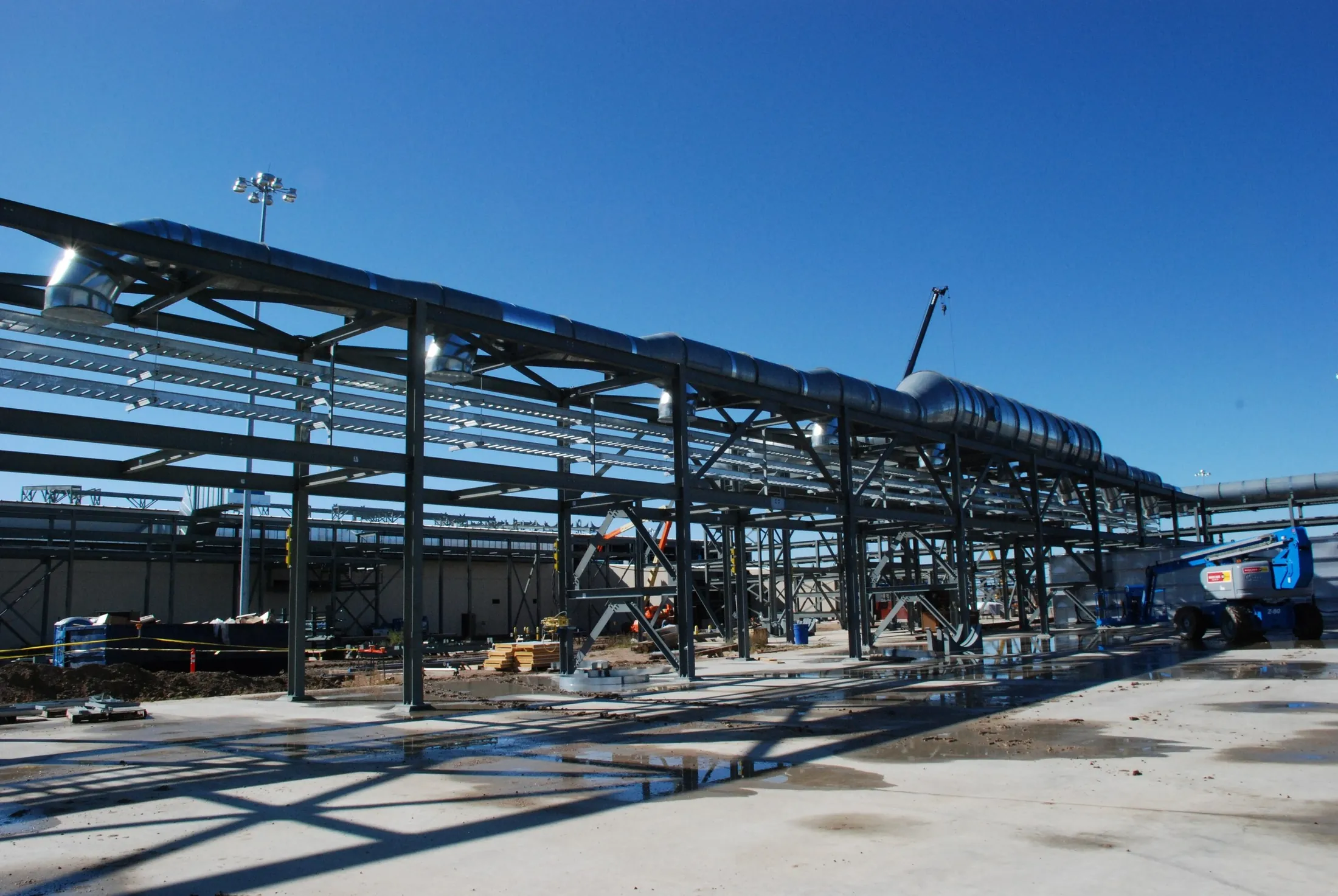
Industrial construction usually starts with structure and ends with equipment. Steel frames and pipe racks go up first, sometimes as pre-assembled modules bolted together on the ground and set in one pick. Then come the heavy items: machinery, process skids, pumps, compressors, tanks and vessels. Equipment is landed on anchor bolts or soleplates so millwrights and pipefitters can align, grout and connect it after the crane leaves.
Tall vessels and towers usually ship lying down and are stood up on site, often in a tailing lift: one crane on the top lugs, a second crane holding the bottom until the vessel hangs vertical. Shops and fabrication buildings also need a crane to set runway beams and bridges for overhead cranes. On Texas plant sites, caliche pads and soft ground after a rain both affect where a crane can sit.
- Walk the site for ground, overhead lines and buried utilities.
- Confirm equipment weights, lifting lugs and anchor bolt patterns.
- Set up on mats and rig spreader bars or lifting beams.
- Land equipment on its bolts so millwrights can align it.
- Tail vessels to vertical with a second crane when needed.
- Release the rigging, demob and leave the area clear for piping.
Crane and operator for industrial construction
Every job goes out with the right crane for the lift, an NCCCO-certified operator and a rigger.
Before calling dispatch, gather the equipment data and site details that drive the crane setup and the rigging.
- Equipment weights, dimensions and lifting lug locations
- Foundation drawings with the anchor bolt layout
- Plot plan showing crane access and laydown
- Overhead lines, pipe racks and buried utilities
- Plant permits or safety orientation requirements
- Delivery schedule for the equipment trucks
Rigging plans and safety plans for industrial construction
Expansions at running plants bring their own hazards: live process lines, overhead pipe racks, energized electrical gear and other crews working nearby. Most plants require work permits, a safety orientation and a lift plan before a crane can swing. We write rigging plans with crane position, radius, load weights and rigging, plus safety plans that cover exclusion zones, communication and the plant's own rules.
Heavy machinery and vessels often carry their center of gravity off to one side. The manufacturer's lifting points and drawings should drive the rigging, not guesswork. Tandem and tailing lifts take extra planning, because the load shifts between cranes as the piece rotates. Those lifts are worked out on paper, step by step, before either crane arrives on site.
Book a crane
Call dispatch or send a lift request. Tell us the load, the location and the date.
FAQ
Questions about industrial construction crane services
How is a tall vessel or tower stood up with a crane?
Most tall vessels arrive lying flat. A main crane picks the top lugs while a tail crane holds the bottom. As the main crane raises the top, the tail crane moves in until the vessel hangs vertical, then the main crane sets it on the foundation bolts. It takes a written lift plan and certified operators on both cranes.
Can a crane set machinery inside an existing building?
Sometimes. If there is a roof hatch, a wall opening or a removable panel, a crane can set or lower equipment through it. Otherwise the crane lands it at the door and it is moved inside on skates or rollers. Tell us the building, the size of the opening and the equipment weight so we can plan it.
Do you set runway beams and bridges for overhead cranes in new shops?
Yes, that is a common crane job in a new shop or plant building. Runway beams are set on the column brackets, then the bridge, often assembled on the ground, is lifted onto the rails. Send the beam lengths, weights and building drawings, and we will plan where the crane sits.
More from Concho Crane Co.